

We keep being told AI will replace employees. Fine, or not, you choose. The question nobody asks is where the AI budget should sit, and who else will want a share of it.
The AI budget is a labor budget
Think about what HR owns in most companies: job architecture, pay bands, who gets hired and at what level. Basically, where the money for getting work done by humans goes.
AI now does a chunk of that same work, and it costs real money. Tokens, seats and usage, billed every month and climbing as you lean on it more.
So who owns that budget? Engineering. Finance. Whoever signed up for the API first. But if AI does the work, that spend is a labor budget. It just never lands on a payroll line.
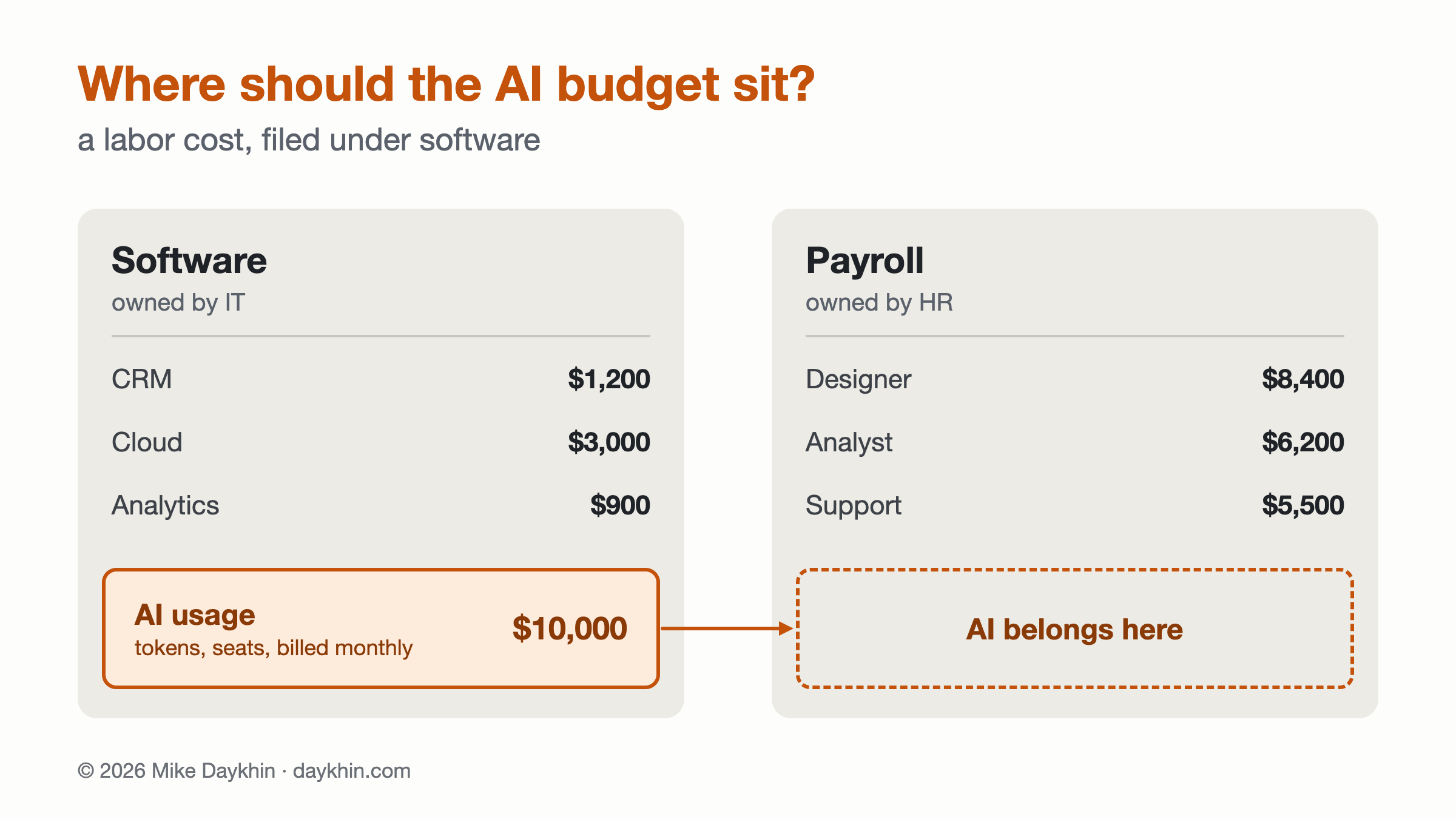
Startups don't have this problem, because the founder owns both. It shows up as you scale, when the two budgets end up in different rooms with different bosses.
The first company to fix it has to do something awkward: put the AI budget and the headcount budget on the same table, give them one owner, and trade them off. One more seat on AI, or two more hires? That's not an IT call. That's about as HR a question as it gets.
HR didn't ask for this and probably isn't ready for it. But the money already moved.
The owner I forgot: the state
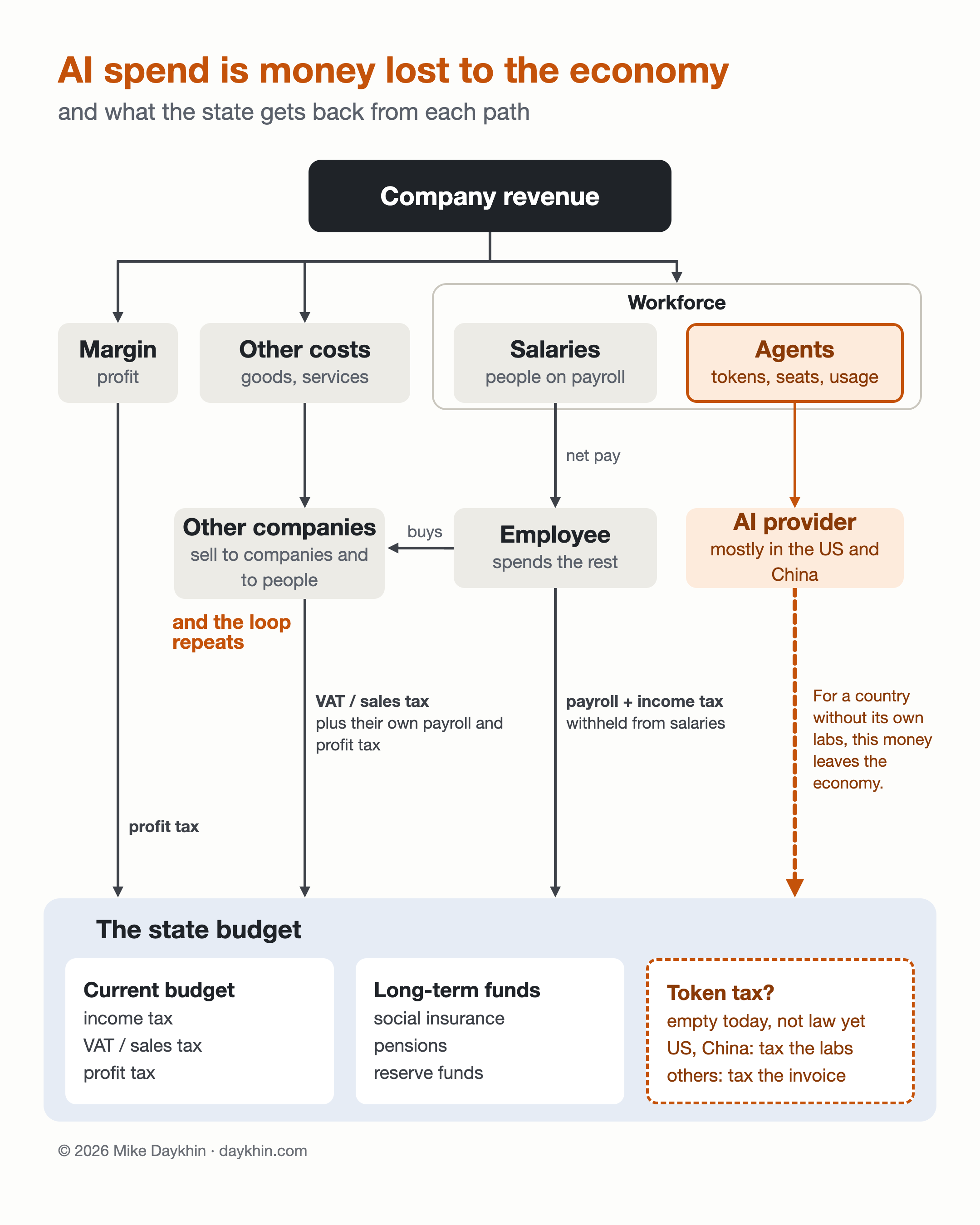
Every salary you pay sends a share back to the state budget. The state takes payroll tax, then income tax, then VAT or sales tax when the person spends the rest.
Move part of that payroll to agents, and the money goes to whoever runs the model. Governments don't see that spend as payroll either, and for them the missing money matters much more than it does for HR.
For most countries that means paying America or China. Those two can tax the labs, because the labs are theirs. In August, Democrats in the US Congress proposed a law to tax major AI companies, with a rate that grows as unemployment grows.
Everyone else watches the money leave. Nobody pays payroll or income tax on it, and no local shopper spends it. Give it two or three years, and a budget built on labor taxes will look for a new base. The easiest one left is what crosses the border, and that will be your token bill.
We've seen this before
Taxing a tool that makes you more productive sounds wrong. But when Netflix and YouTube took the audience from local cinemas and TV, France made them pay a tax to its national film fund in 2017. In 2022 Swiss voters approved their own "Lex Netflix", which makes international streamers put part of their Swiss revenue into Swiss film. Tokens are the same story, only this time the missing base is payroll.
I'm not the only one thinking about this. Bill Gates wrote that you pay payroll tax on a hire but can usually write off a robot right away, so the tax system nudges you toward machines. He suggested taxing robots and AI tokens.
Where this could go differently
None of this is law yet. In May, Bloomberg Tax couldn't find a single government that taxes AI. Nobody agrees on what to tax either: the IMF argues against a dedicated AI tax and would rather raise taxes on capital.
But a finance ministry watching payroll revenue shrink won't wait for economists to agree.
One table, three lines
So next time you weigh one more AI seat against two more hires, put three lines on the table: the token bill, the payroll it replaces, and a tax line next to the tokens. Today the tax line says zero. I wouldn't plan on zero for three years.
Either agents are workforce, and sooner or later HR plans them and the state taxes them like workforce. Or they're software, and then stop saying they replace people.
Which way, and how fast, will your government go?
First published on LinkedIn in two parts, in June and November.